Portable analytical Solutions logo
Malvern logo

Malvern Panalytical Scientific Award 2023

Our 2023 Scientific Award is now open – and there’s a €5,000 prize for the best entry.
Entries close August 31st – you’ve still got time!

What materials can be analysed with NIR?

Where NIR is most commonly applied

NIR is well-suited to materials where organic molecular absorptions can be measured and correlated to concentration. In practice, PAS positions NIR for field and operational use across several material types and contexts:

  • Mineral and geological materials (mining and exploration): NIR can produce a high-quality spectrum for mineral identification and assessing material properties, supporting fast field decisions.
  • Agricultural materials (crops and food production): NIR is used to assess crop parameters such as sugar content, water content, and indicators of ripeness, and can support decisions through the food production cycle from production to grading and sorting.
  • Asbestos and waste-related materials: PAS references asbestos detection and broader waste management contexts where accurate identification of waste and demolition materials is important for safe handling and treatment decisions.
  • Medical and clinical lab contexts: NIR is described as being used for clinical laboratory testing and non-invasive diagnosis applications.

Considering NIR for your application

If you need fast, non-destructive identification of materials on-site, start with the fundamentals of the Near Infra-Red Spectroscopy (NIR) technology, then review the portable NIR analysers available through Portable Analytical Solutions. If you want to sanity-check fit for your specific material and workflow, get in touch and outline what you need to analyse and where the testing will happen.


What wavelengths does NIR use?

NIR wavelength ranges in practice

You will see NIR described with slightly different lower limits depending on the context and instrument design.

For general NIR spectroscopy, PAS defines the near-infrared region used for identification as about 350 to 2500 nm.

For many portable NIR analysers, the emitted near-infrared radiation is described as typically 750 to 2500 nm, which reflects common analyser configurations and application needs.

If you are comparing devices or planning a method, use the analyser’s stated wavelength coverage to confirm it captures the spectral features needed for your target materials.

Choosing the right NIR analyser for your wavelength needs

Start with the PAS overview of Near-Infrared Spectroscopy (NIR) technology, then review the portable NIR analyser range to match wavelength coverage to your application. If you want help selecting a suitable option, you can get in touch with Portable Analytical Solutions.

What Does NIR Spectroscopy Measure?

From light to result in a handheld workflow

1) Light emission
The analyser uses an internal light source to emit near-infrared radiation, typically across the 750 to 2500 nm range.

2) Absorption and reflection
Molecular bonds absorb specific NIR wavelengths. This creates a spectral pattern linked to overtone and combination vibrations, and that pattern changes with the type and concentration of the material.

3) Detection
The instrument measures the reflected or transmitted light after it interacts with the sample. The difference between what was emitted and what was detected forms the spectrum.

4) Analysis and reporting
Software processes the spectrum using chemometric methods to deliver rapid outputs. Depending on the model, this can be material identification, classification, or quantitative estimates such as moisture or grade.

In practice, portable NIR is used because it is rapid and non-destructive, often with little or no sample preparation. It is most effective when your workflow controls the basics that influence spectra, such as consistent contact with the sample, surface condition, and a calibration built for your target materials.

Considering portable NIR for your application

If you are evaluating NIR for field use, start with the technology fundamentals on the Near-Infrared Spectroscopy (NIR) technology overview and then compare form factors and use cases across the portable NIR analyser range

For guidance on calibration fit, sampling approach, and whether NIR is appropriate for the materials you need to measure, you can also explore solutions with Portable Analytical Solutions or get in touch.

How Does A Portable NIR Analyser Work?

From light to result in a handheld workflow

1) Light emission
The analyser uses an internal light source to emit near-infrared radiation, typically across the 750 to 2500 nm range.

2) Absorption and reflection
Molecular bonds absorb specific NIR wavelengths. This creates a spectral pattern linked to overtone and combination vibrations, and that pattern changes with the type and concentration of the material.

3) Detection
The instrument measures the reflected or transmitted light after it interacts with the sample. The difference between what was emitted and what was detected forms the spectrum.

4) Analysis and reporting
Software processes the spectrum using chemometric methods to deliver rapid outputs. Depending on the model, this can be material identification, classification, or quantitative estimates such as moisture or grade.

In practice, portable NIR is used because it is rapid and non-destructive, often with little or no sample preparation. It is most effective when your workflow controls the basics that influence spectra, such as consistent contact with the sample, surface condition, and a calibration built for your target materials.

Considering portable NIR for your application

If you are evaluating NIR for field use, start with the technology fundamentals on the Near-Infrared Spectroscopy (NIR) technology overview and then compare form factors and use cases across the portable NIR analyser range

For guidance on calibration fit, sampling approach, and whether NIR is appropriate for the materials you need to measure, you can also explore solutions with Portable Analytical Solutions or get in touch.

What is NIR spectroscopy?

How NIR spectroscopy works in practical testing

In a typical workflow, an instrument illuminates the sample with near infra-red light and records the returned signal across a range of wavelengths. The resulting spectrum contains broad absorption features linked to chemical bonds (especially those involving C–H, O–H, and N–H), which makes NIR well suited to screening and quantifying many organic materials.

NIR is commonly used when you need rapid, non-destructive measurements with minimal sample preparation. It is particularly effective where calibrated models exist for your product type, because results are usually derived by comparing the spectrum to a reference dataset built from known samples.

As with any spectroscopy method, performance depends on sample variability, calibration quality, and measurement conditions. Factors like moisture, particle size, surface finish, and temperature can influence spectra, so good sampling practice and ongoing model validation matter.

Exploring NIR for field and process use

For a deeper overview of the method, see our guide to near infra-red spectroscopy (NIR) and review typical portable NIR analysers used in real-world testing. 

If you want to sense-check suitability for your material and accuracy requirements, start with Portable Analytical Solutions and get in touch with our team.

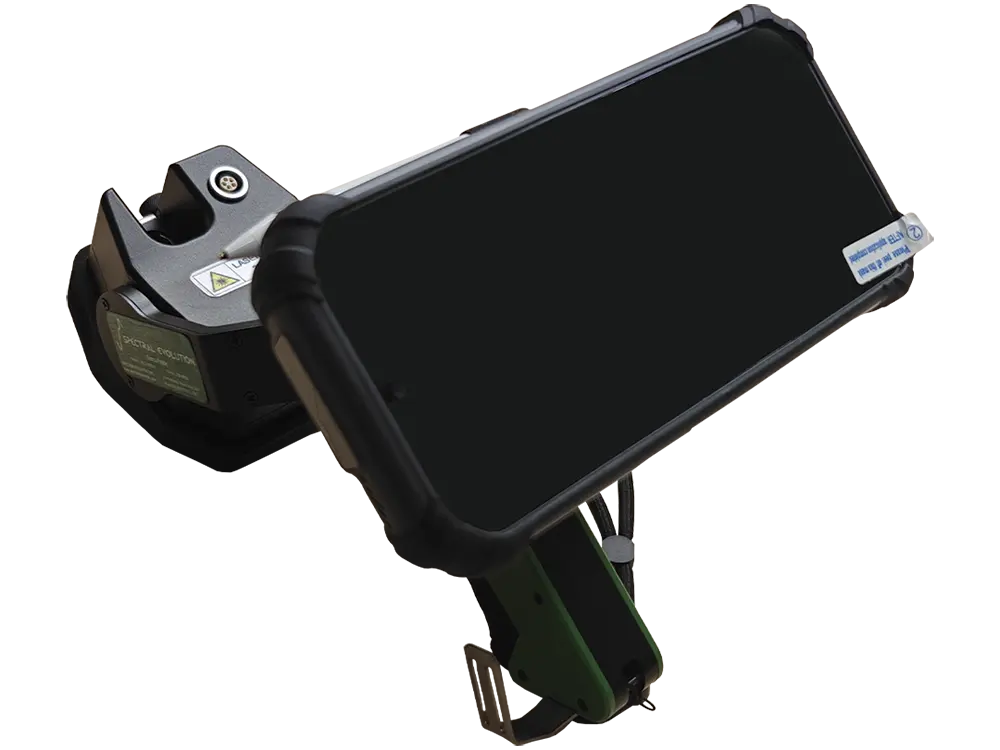
Sensaprobe with Built-In Camera

Sensaprobe™ with Built-In Camera

Spectral Evolution – NIR

Real-Time Visual Targeting for Reliable Field Data

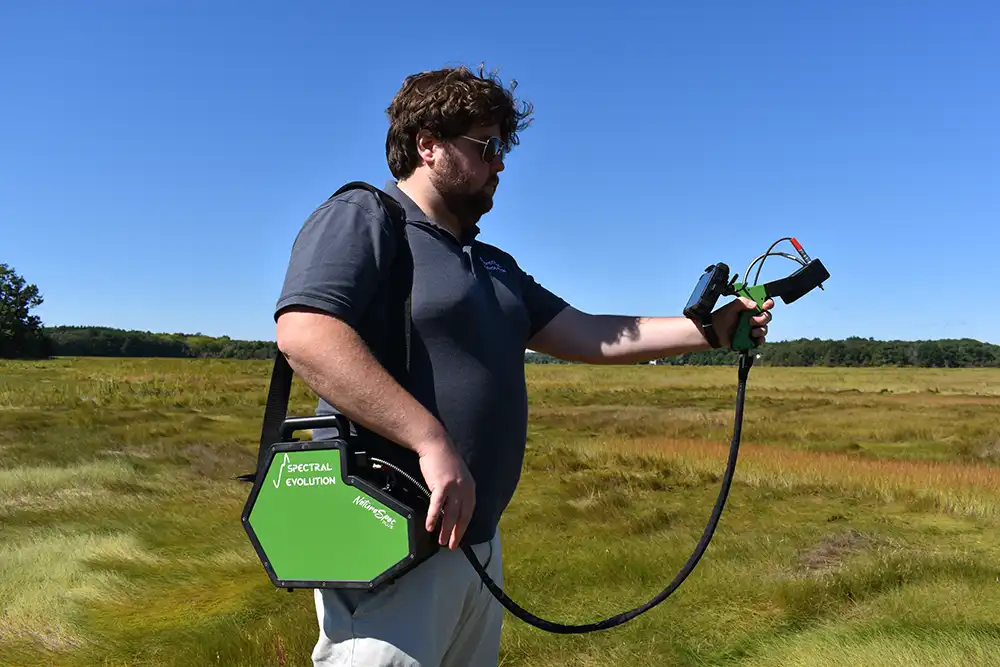
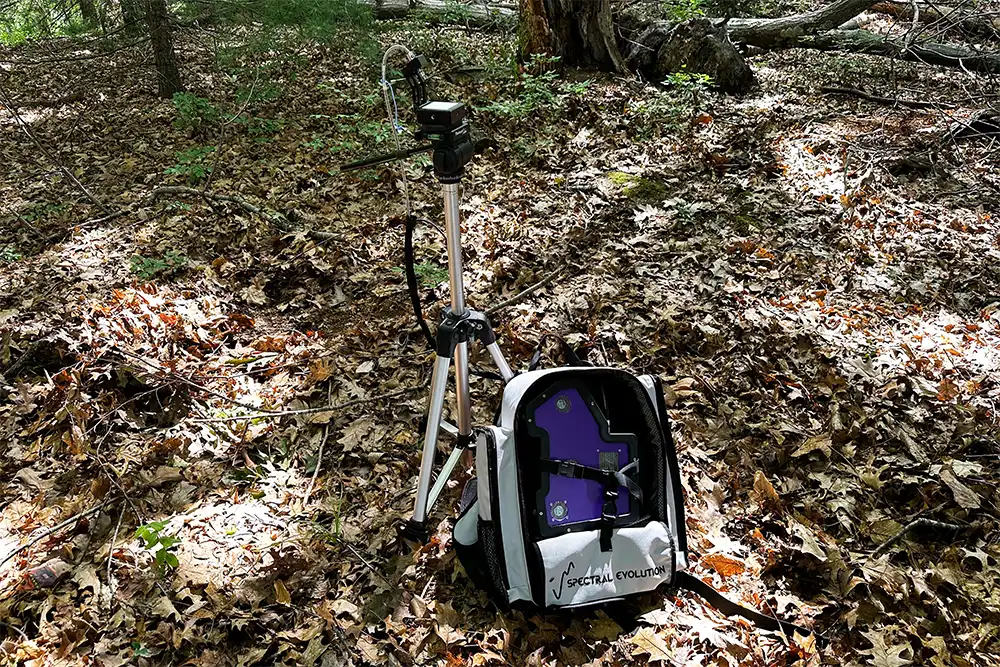
The Sensaprobe wirelessly connects to Spectral Evolution spectroradiometers using Bluetooth, enabling full system control from a tablet attached directly to the device.

A mobile-friendly edition of Spectral Evolution’s DARWin™ data collection software presents live spectral readouts alongside a real-time video stream from the Sensaprobe’s integrated camera, supporting precise target alignment.

This workflow allows operators to verify the sensor’s field of view and accurately define target boundaries prior to initiating a scan.

Natura Spec
Ore Explorer Logo
Sensaprobe with Built-In Camera 2
Sensaprobe with Built-In Camera 3

Key Applications for Sensaprobe™

  • ­• Mineral unmixing
    • Soil identification
    • Vegetation studies
    • Materials identification
    • Microbial diversity research

Speak to PAS for expert guidance about the Spectral Evolution Sensaprobe.

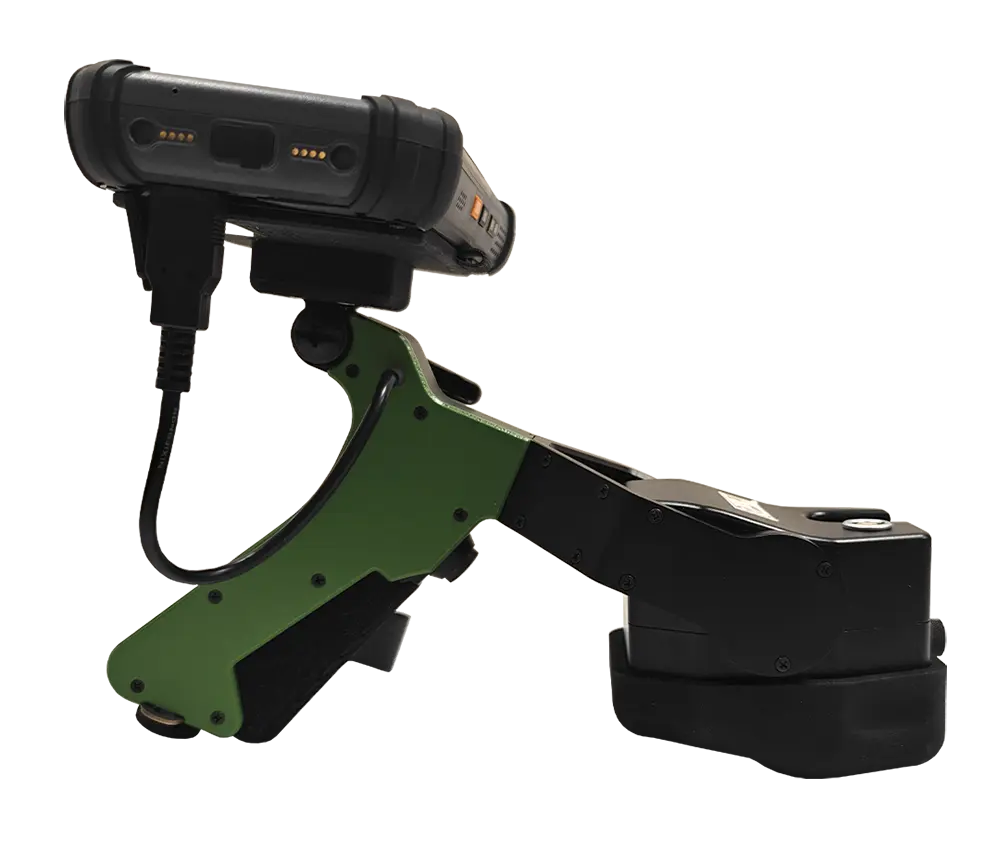
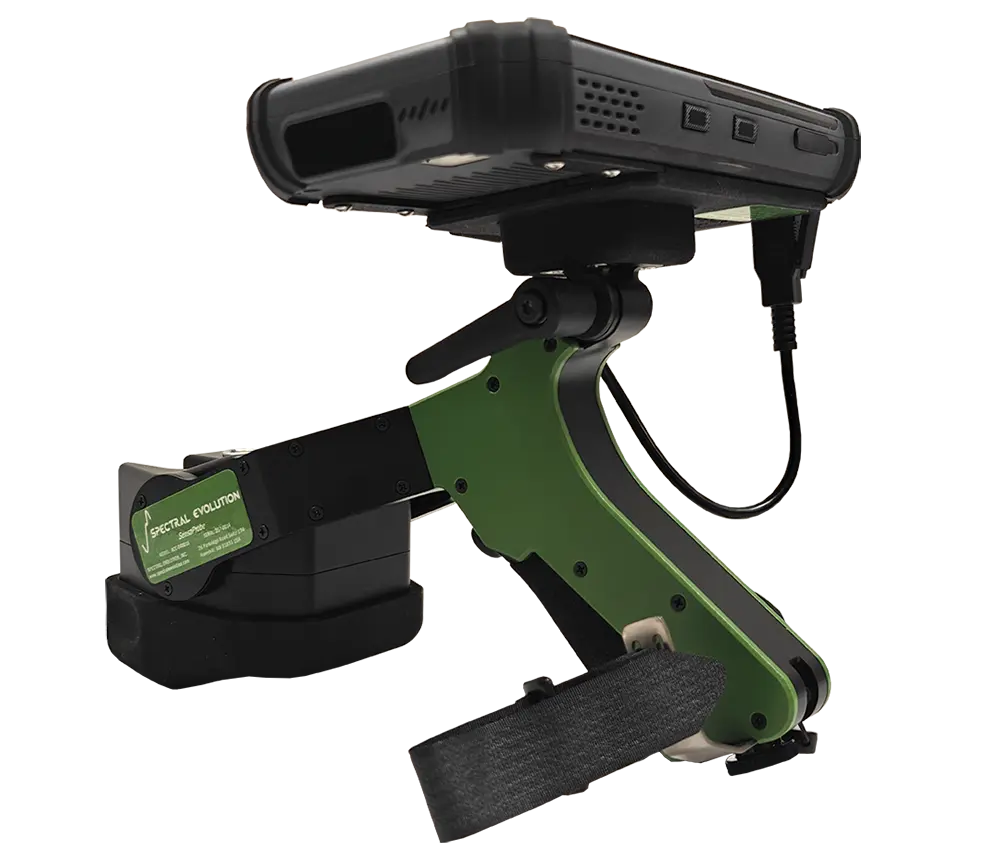
Sensaprobe™ Features:

  • Rapid-detach fiber-optic mounting system
  • Integrated inclinometer that records tilt angle and embeds accurate orientation metadata with every scan
  • Onboard camera delivering a live video stream with automated photo capture
  • Laser rangefinding module for precise distance measurement and field-of-view computation
  • Scan initiation via trigger control for efficient field operation
  • Dedicated tablet mount enabling simplified workflow and real-time viewing of targets and scan data
Sensaprobe with Built-In Camera 4
Sensaprobe with Built-In Camera 5

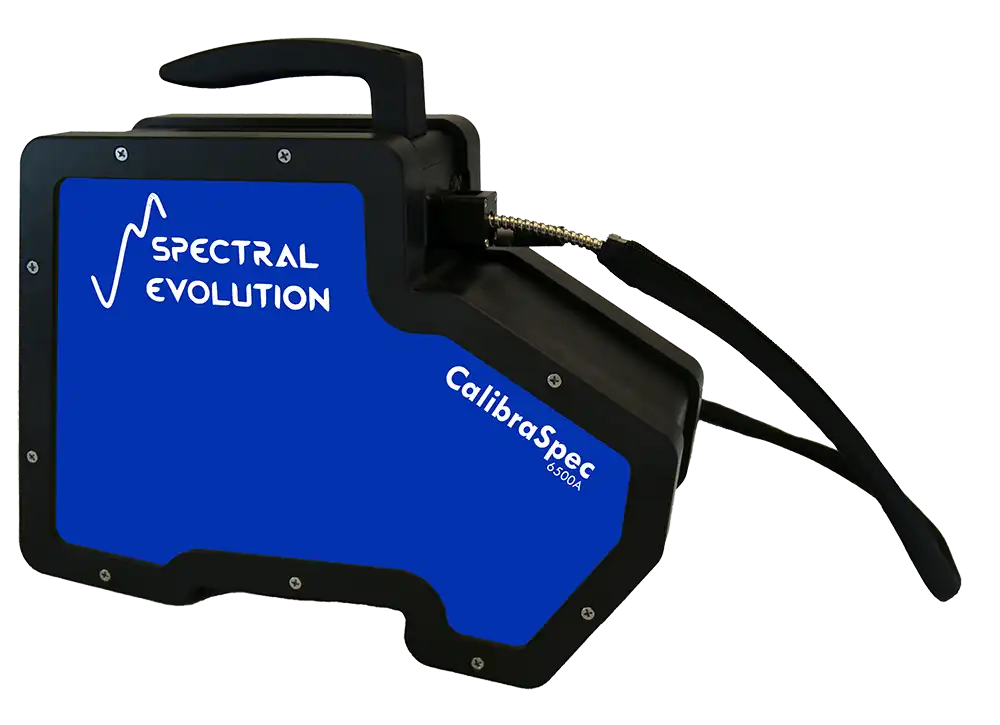
CalibraSpec 6500A

Ultimate Stability and Spectral Resolution

The CalibraSpec 6500A spectroradiometer from Spectral Evolution delivers unmatched accuracy in a portable design. It provides exceptional spectral resolution, making it ideal for applications that require precise identification of spectral features.

Equipped with fully thermoelectrically cooled photodiode arrays, the CalibraSpec 6500A is engineered for reliable accuracy, stability, and repeatable measurements.

Spectral Evolution CalibraSpec-6500A

Specifications

Spectral Range

350-2500nm

Spectral Resolution

1.5nm @ 700nm

3nm @ 1500nm

3.8nm @ 2100nm

Sampling Bandwidth (nm)

Data output in 1nm increments; 2151 channels reported

Spectrometer Type

3 Diffraction Gratings

Detector(s)

1024-element UV-enhanced TE-cooled Si Array

512-element TE-cooled InGaAs array

512-element TE-cooled extended InGaAs array

Calibration

Factory calibrated for radiance and/or irradiance using NIST traceable source (depending upon optics selection)

Noise Equivalence Radiance

W/cm2/nm/sr

(1.2m fiber optic)

0.4×10⁻⁹ @ 400nm

0.2×10⁻⁹ @ 1500nm

2.0×10⁻⁹ @ 2100nm

Stray Light

≤0.1%; VNIR: <0.03%; SWIR<0.02%

Software Included

DARWin™ SP Data Acquisition

Power

12V, 33W

Dimensions

12.4″x 8.7″x 4.4″

Weight

12.64 lbs

Interface

USB, Wireless Connection

Integration Time

1 – 1000 ms

Match Radiance

VNIR: 10 x Solar; SWIR: 2 x Solar

Wavelength Reproducibility (nm)

0.1

Wavelength Accuracy (nm)

0.5

Automatic Exposure

Shutter for Dark Scans

TTL & Phototriggering for pulsed measurement

No

Key Applications for CalibraSpec 6500A

  • ­• Mineral unmixing
    • Soil identification
    • Vegetation studies
    • Materials identification
    • Microbial diversity research

Speak to PAS for expert guidance about the Spectral Evolution CalibraSpec 6500A.

CalibraSpec 6500A Features:

  • Maintains drift stability of 0.1% for highly accurate long-term measurements of integrating spheres and light sources.
  • Built-in temperature controller keeps the instrument housing stable, reducing warm-up time.
  • All detector temperatures are displayed in DARWin™ SP software for real-time monitoring.
  • Automatic detector integration and dark current correction ensure an exceptional signal-to-noise ratio.
  • High-transmission fiber optic cables are radiometrically calibrated to NIST standards.
  • Optional radiometrically calibrated accessories, including lenses and cosine receptors, are available.

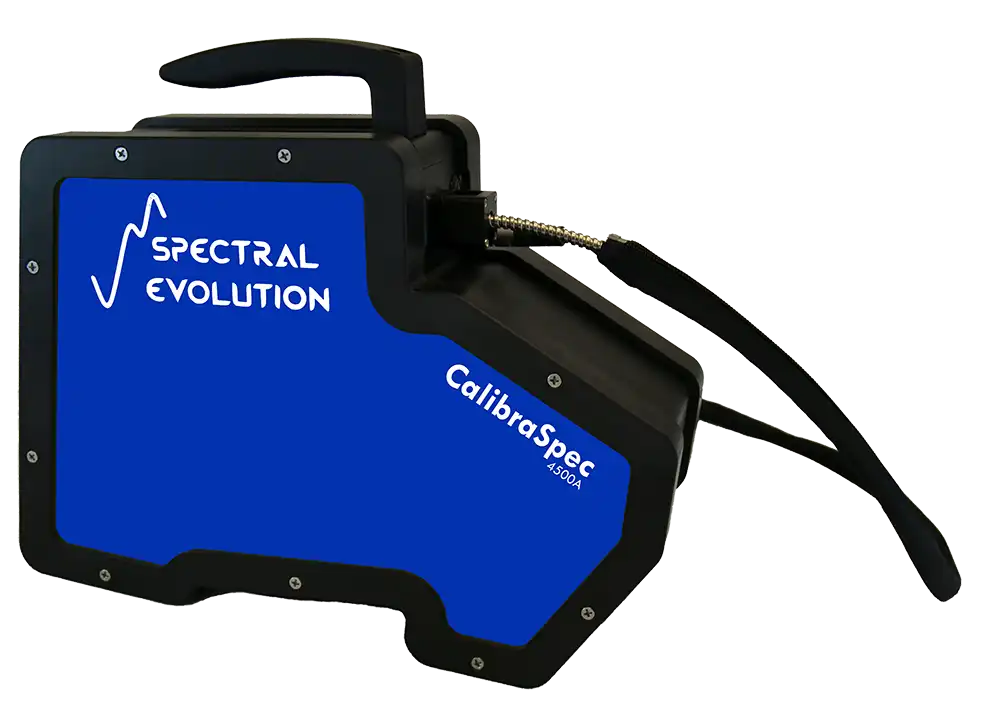
CalibraSpec 4500A

Ultimate Stability in Radiometric Calibration Transfer Calibration Transfer

The CalibraSpec 4500A spectroradiometer from Spectral Evolution delivers exceptional stability and precision for a wide range of spectral measurement applications.

Equipped with fully thermoelectrically cooled photodiode arrays, it is specifically designed to meet the demanding requirements of calibration transfer workflows.

Spectral Evolution CalibraSpec-4500A

Specifications

Spectral Range

350-2500nm

Spectral Resolution (FWHM)

3nm @ 350-1000nm

8nm @ 1500nm

6nm @ 2100nm

Sampling Bandwidth (nm)

Data output in 1nm increments; 2151 channels reported

Spectrometer Type

3 Diffraction Gratings

Detector(s)

512-element UV-enhanced TE-cooled Si Array

Two 256-element TE-cooled extended InGaAs arrays

Calibration

Factory calibrated for radiance and/or irradiance using NIST traceable source (depending upon optics selection)

Noise Equivalence Radiance

W/cm2/nm/sr

(1.2m fiber optic)

0.2×10⁻⁹ @ 400nm

0.2×10⁻⁹ @ 700nm

0.9×10⁻⁹ @ 900nm

1.2×10⁻⁹ @ 1500nm

1.8×10⁻⁹ @ 2100nm

Stray Light

≤0.1%; VNIR: <0.03%; SWIR<0.02%

Software Included

DARWin™ SP Data Acquisition

Power

7.5V, 30W

Dimensions

12.4″x 8.7″x 4.4″

Weight

12.64 lbs

Interface

USB, Wireless Connection

Integration Time

1 – 1000 ms

Match Radiance

VNIR: 10 x Solar; SWIR: 2 x Solar

Wavelength Reproducibility (nm)

0.1

Wavelength Accuracy (nm)

0.5

Automatic Exposure

Shutter for Dark Scans

TTL & Phototriggering for pulsed measurement

No

Key Applications for CalibraSpec 4500A

  • Solar radiance and irradiance measurements
  • Solar simulator test and classification
  • LED, laser, light source metrology
  • Radiometric calibration transfer
  • Remote sensing applications

Speak to PAS for expert guidance about the Spectral Evolution CalibraSpec 4500A.

CalibraSpec 4500A Features:

  • Maintains drift stability of 0.1% for highly accurate long-term measurements of integrating spheres and light sources.

  • Built-in temperature controller keeps the instrument housing stable, reducing warm-up time.

  • All detector temperatures are displayed in DARWin™ SP software for real-time monitoring.

  • Automatic detector integration and dark current correction ensure an exceptional signal-to-noise ratio.

  • High-transmission fiber optic cables are radiometrically calibrated to NIST standards.

  • Optional radiometrically calibrated accessories, including lenses and cosine receptors, are available.

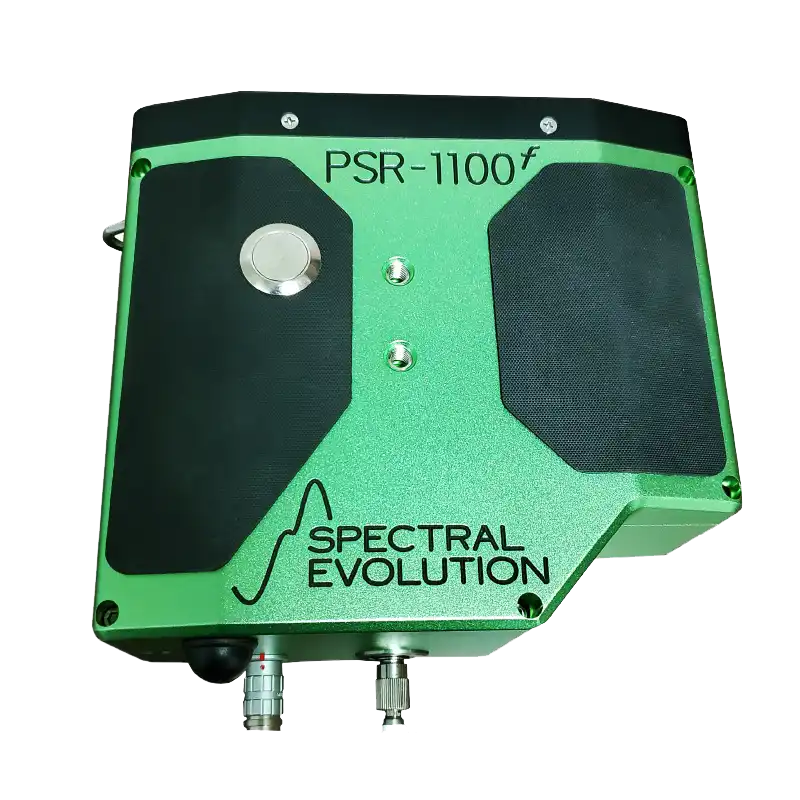
PSR-1100f

Smart, Lightweight, Full Featured

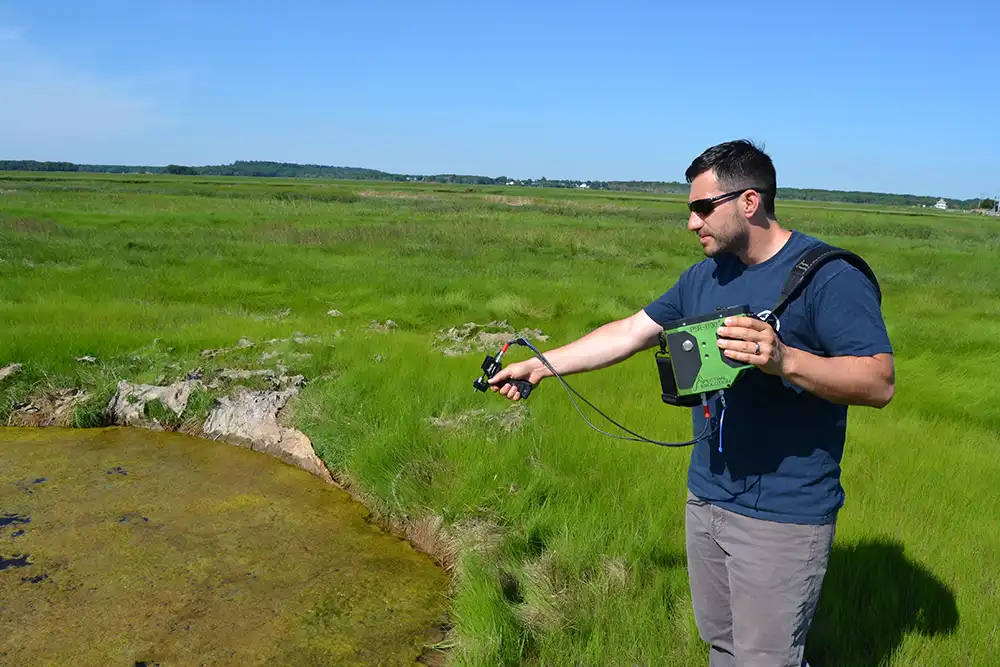
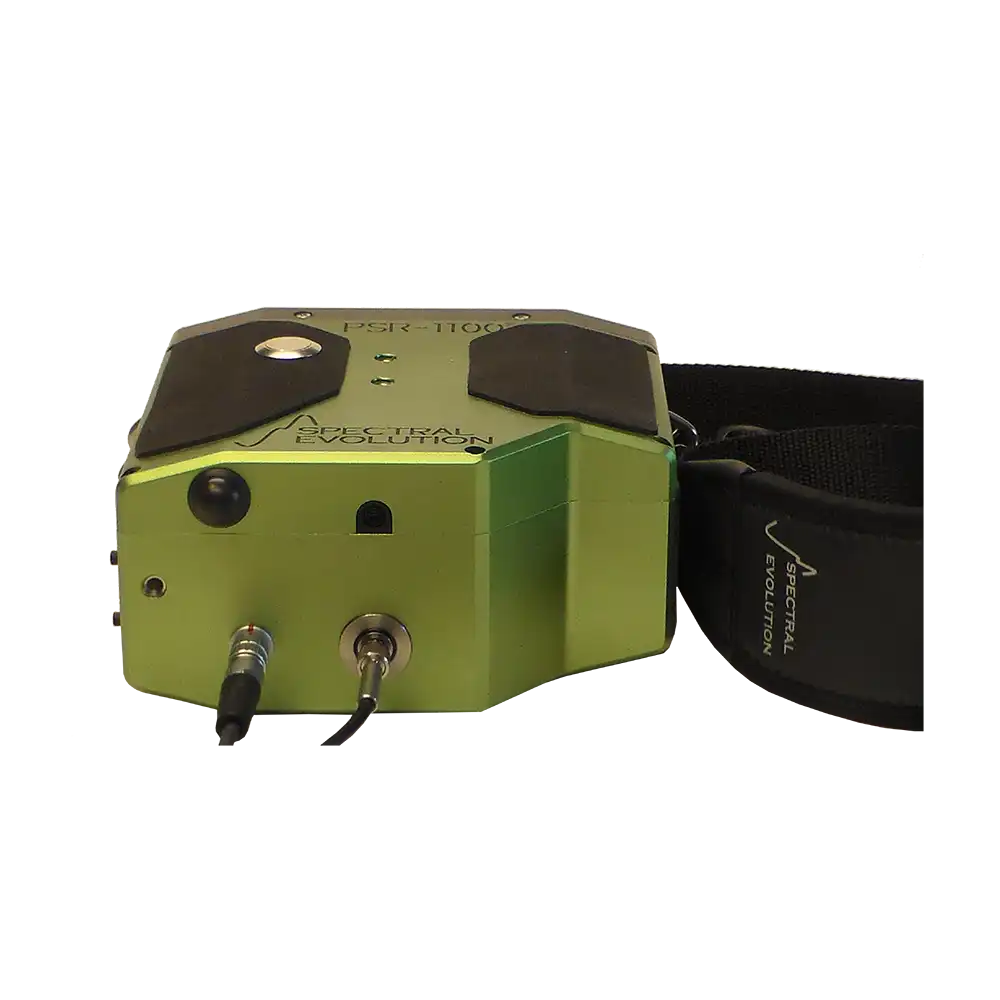
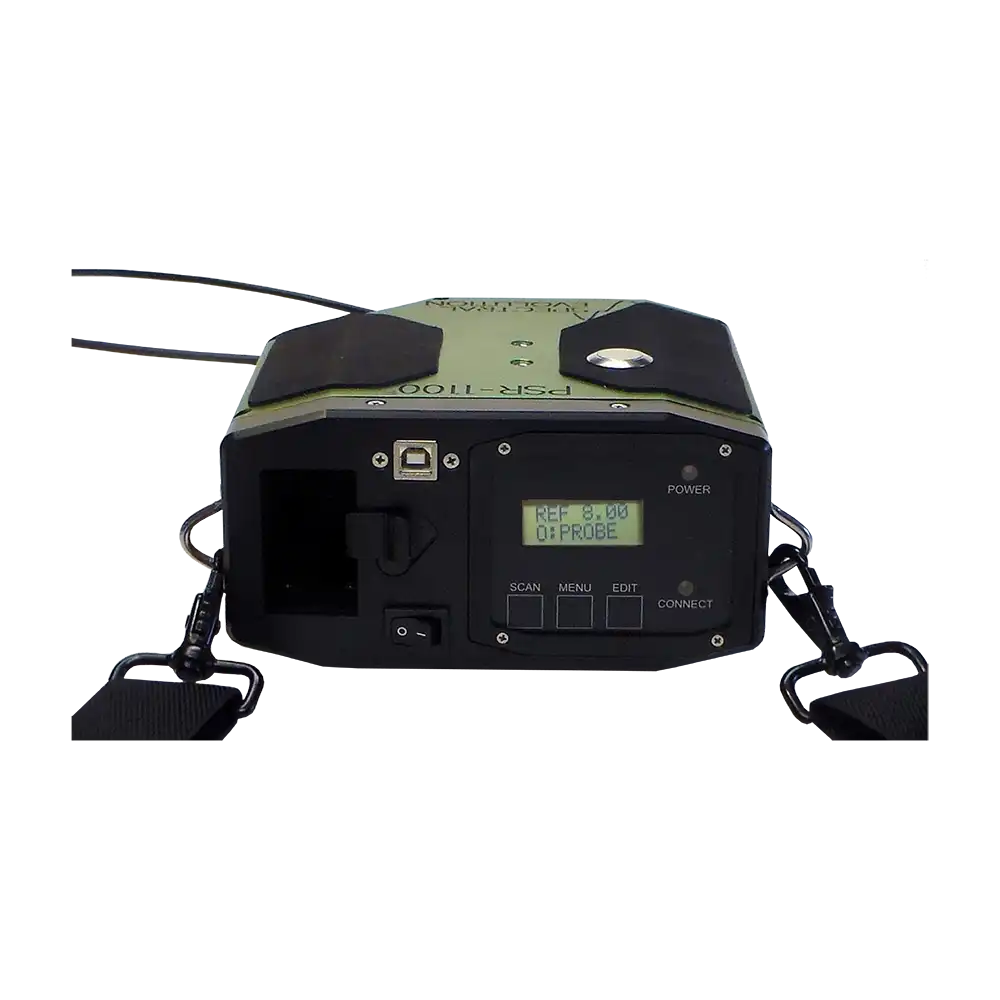
Designed for portability, the PSR-1100f is an entry-level spectroradiometer ideal for field applications. Weighing under 4 lbs, it features a shoulder strap and battery operation, allowing you to stay focused on your fiber and sample collection without added distractions.

The PSR-1100f is equipped with a rugged, removable fiber optic cable and supports a broad selection of optional field-of-view lenses and irradiance diffusers.

Despite its compact size, the instrument includes onboard storage that can capture up to 2,500 scans, eliminating the need to carry a laptop or tablet into the field.

PSR-1100f 7

Specifications

Spectral Range

320-1100nm

Spectral Resolution

3.0nm@600nm

Spectral Sampling Bandwidth (nm)

Data output in 1nm increments;
781 channels reported

Detector(s)

512-element Si Array

Calibration

Spectral and radiometric calibration for radiance/irradiance measurements using NIST traceable sources.

Noise Equivalence Radiance

W/cm2/nm/sr
(1.2m fiber optic)

0.8×10⁻⁹ @ 700nm

Software Included

DARWin™ SP Data Acquisition

Power (volts/watts)

7.5v, 2.5w

Dimensions (in/mm)

7 x 3.3 x 5.8 (in)

177.8 x 82.5 x 147.3 (mm)

Weight (lbs/kg)

4 lbs | 1.8 kg

Interface

USB, Wireless Connection

Minimum Scan Speed

100ms

Wavelength Reproducibility (nm)

0.1nm

Wavelength Accuracy (nm)

±0.5nm bandwidth

Automatic Data

Data Optimization | One Touch Operation | Automatic Exposure | Detector Integration | Dark Current Correction

Input

1m fiber optic (25° field of view); optional fore optics
and optional longer fiber optic cables available

Operational temperature range (°C)

0 to 40 degrees

Maximum Radiance

VNIR 2x Solar | SWIR 10x Solar

PSR-1100f 8
PSR-1100f 9

Key Applications for PSR-1100f

  • Vegetation Studies
  • Soil Analysis
  • Crop Health
  • Agricultural Research
  • Plant Science
  • Biomass Research
  • Leaf Chlorophyll Content
  • Water Body Studies
  • Climate Studies
  • Environmental Research
  • Nitrogen Level Measurements
  • Forest Canopy Studies
  • Ecological Research
  • Ice and Glacier Research

Speak to PAS for expert guidance about the Spectral Evolution PSR-1100f.

PSR-1100f 10

PSR-1100f Features:

  • 320-1100nm spectral range
  • 3nm resolution
  • Removable/replaceable fiber optic cable with FC connection
  • Rugged anodized aluminum construction
  • Keypad & LCD display
  • Internal memory stores 2500 scans without a computer
  • Auto exposure & auto dark shutter
  • Snap-in lithium-ion rechargeable battery
  • Wireless interface
  • Shoulder strap for easy mobility

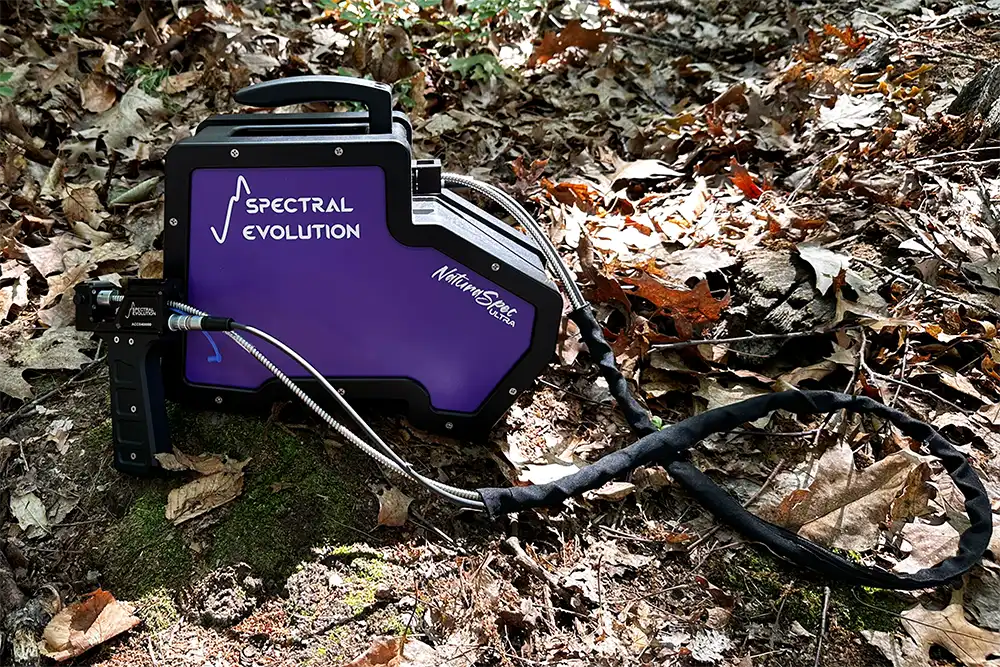
NaturaSpec Ultra

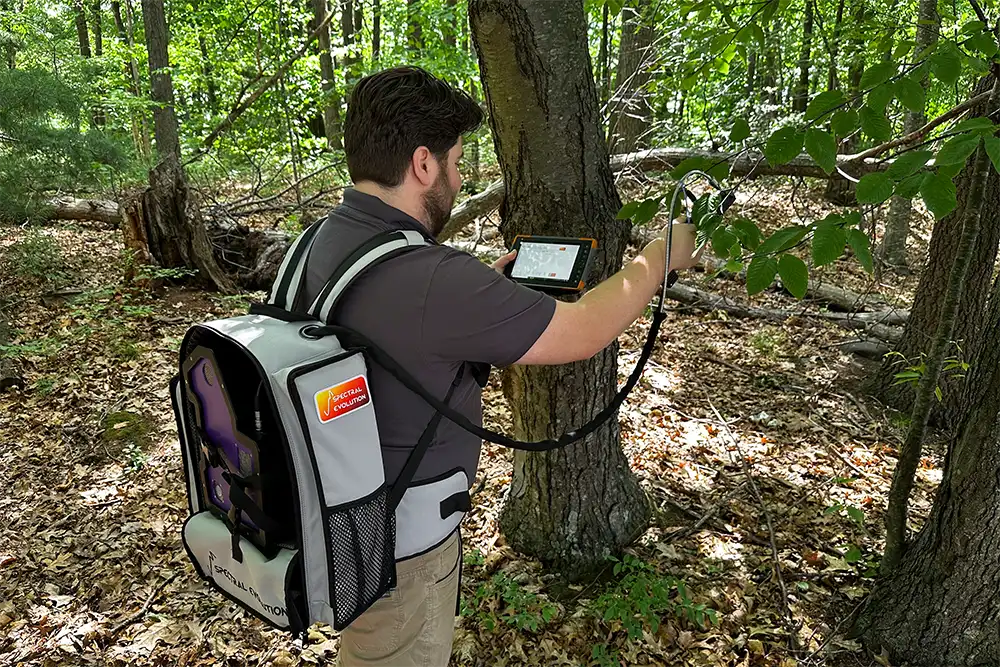
Identify minerals in the field

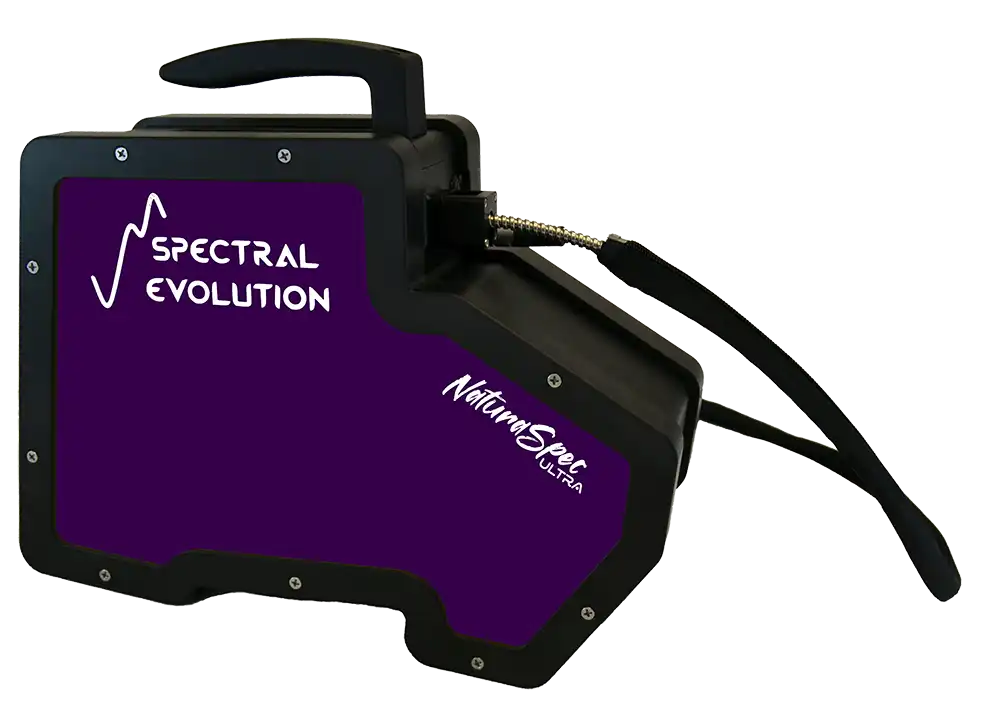
The NaturaSpec™ Ultra spectroradiometer delivers the highest spectral resolution available in a field instrument. It allows researchers to validate and calibrate even the most advanced hyperspectral cameras and satellites on-site, bringing laboratory-quality data directly into the field.

Ideal for building high-resolution spectral libraries, the NaturaSpec Ultra sets a new standard for precision in spectral analysis.

NaturaSpec Ultra 12

Specifications

Spectral Range

350-2500nm

Spectral Resolution

1.5nm@700nm

3nm@1500nm

3.8nm@2100nm

Spectral Sampling Bandwidth (nm)

Data output in 1nm increments;
2151 channels reported

Detector(s)

1024-element UV-enhanced Si Array

512-element TE-cooled InGaAs Array

512-element extended TE-cooled InGaAs Arrays

Calibration

Spectral and radiometric calibration for radiance/irradiance measurements using NIST traceable sources.

Noise Equivalence Radiance

0.4×10⁻⁹ @ 400nm

0.2×10⁻⁹ @ 1500nm

4.0×10⁻⁹ @ 2100nm

Software Included

DARWin Data Aquisition

Power (volts | watts)

12v | 33w

Dimensions (in | mm)

12.4 x 8.7 x 4.4 (in)

314.9 x 220.9 x 111.7 (mm)

Weight (lbs | kg)

12 lbs | 5.5 kg

Interface

USB, Wireless Connection

Minimum Scan Speed

100ms

Wavelength Reproducibility (nm)

0.1nm

Wavelength Accuracy (nm)

±0.5nm bandwidth

Automatic Data

Data Optimization | One Touch Operation | Automatic Exposure | Detector Integration | Dark Current Correction

Input

1.5m fiber optic (25° field of view); optional fore optics
and optional longer fiber optic cables available

Operational temperature range (°C)

0 to 40 degrees

Maximum Radiance

VNIR 2x Solar | SWIR 10x Solar

NaturaSpec Ultra 13
NaturaSpec Ultra 14

Key Applications for NaturaSpec Ultra

  • Vegetation studies
  • Environmental research
  • Soil analysis, mapping, and profiling
  • Ground truthing
  • Geological remote sensing
  • Solar radiance and irradiance research
  • Species identification

Speak to PAS for expert guidance about the Spectral Evolution NaturaSpec Ultra.

NaturaSpec Ultra 15

NaturaSpec Ultra Features:

  • Full spectral range of 350-2500nm
  • 3 photodiode arrays
  • No moving parts for greater reliability
  • Auto-dark current shutter and autoexposure control for one-touch operation
  • User-replaceable, metal-clad fiber optic cable with SMA-905 input
  • Lightweight and compact
Natura Spec