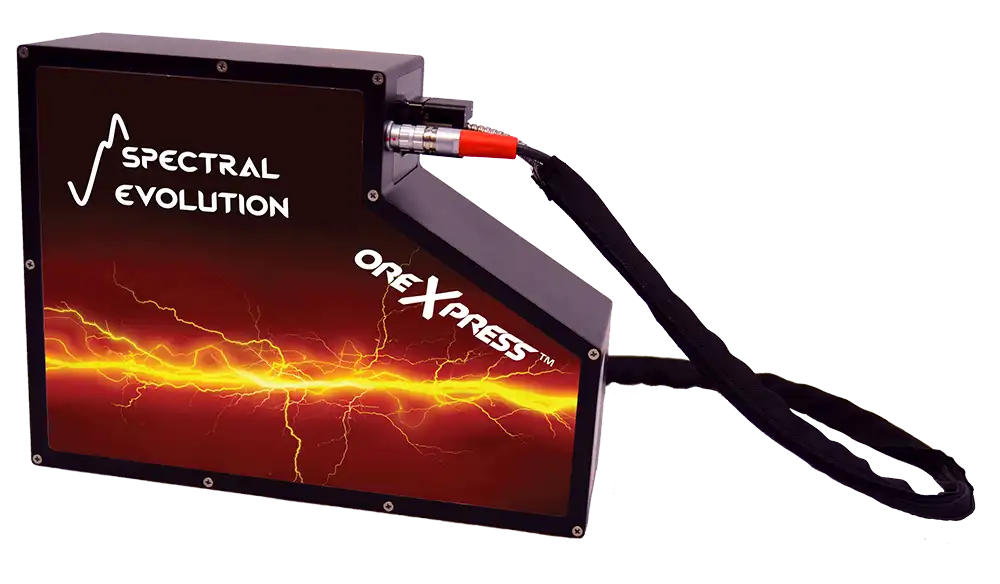
oreXpress
The general-purpose field unit: outcrop, hand samples, RC chips and core-shack logging.
Notice: PAS has relocated to Unit 1, 11 Pinnacle Place, Somersby NSW 2250
Get the data you need, where you need it, to make faster decisions across the mining lifecycle.
Your handheld XRF tells you which elements are present in a sample. NIR helps identify the minerals those elements sit within, adding another layer of information to your exploration data.
That distinction matters when a chlorite call, white mica shift or clay species could influence what happens next. Without mineralogical data, teams may rely on visual logging and experience, or wait for laboratory results.
By bringing XRF, NIR and complementary technologies together on site, PAS helps your team build a clearer picture, make confident decisions sooner and keep exploration moving forward.
Start with the question, not the instrument. Most mining programs use two or three of these together.
XRF gives you elemental chemistry in the field: assay-guided pathfinders, ore and waste calls, grade control, and rapid screening of chips, core and soils. It is the workhorse for anything where the answer is an element and a number. The Thermo Niton XL5 is the model most Australian exploration and grade-control teams end up on.
NIR identifies the minerals themselves. Alteration assemblages, clays, micas, chlorites and carbonates, the species and shifts you vector on. This is the layer XRF cannot see, and the reason PAS took on the Spectral Evolution range.
LIBS reaches the light elements that XRF struggles with, including lithium, beryllium, boron, carbon and sodium. Relevant to battery minerals work and to carbonate and geometallurgical questions.
FTIR identifies molecular structure and is used across mineral, organic and material identification where the sample chemistry needs resolving rather than counting.
Spectral imaging takes mineralogy from a point measurement to a mapped image, so a whole core tray or sample face is characterised rather than sampled. The Headwall HyperCore is built for core scanning at the shed.
Airborne hyperspectral imaging works the same principle at survey scale, mapping surface mineralogy across a tenement from a drone or aircraft to prioritise where you walk and drill.
Browsing by instrument instead of by technique: NIR analysers, handheld XRF analysers, hyperspectral imaging systems, LIBS analysers, FTIR spectrometers.
PAS is the Australian distributor for Spectral Evolution, whose oreX field spectrometers are built for mineral identification where the sample is, not where the lab is.
The oreXpress, oreXplorer and oreXpert all cover 350 to 2500 nm. They separate on resolution and sensitivity rather than on coverage.
The general-purpose field unit: outcrop, hand samples, RC chips and core-shack logging.
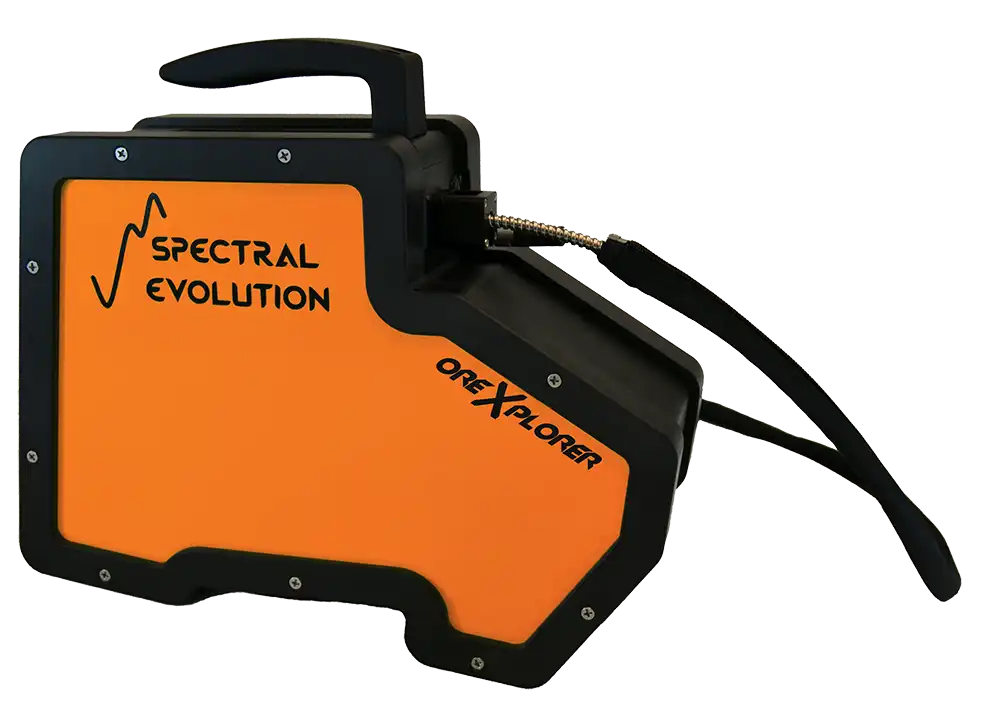
Higher resolution and sensitivity, with single-button operation, automatic dark-current correction and automatic exposure adjustment. Built so the reading does not depend on who is holding it.
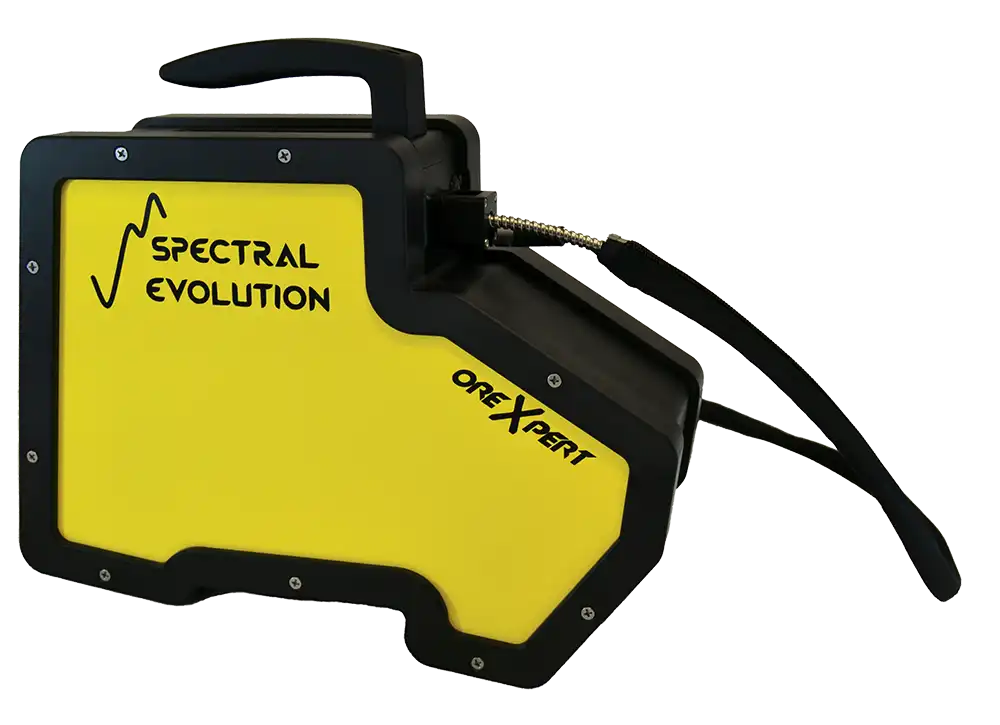
The highest resolution in the range, for trace minerals in mixed samples where the phases are hard to unmix.
Field instruments do not replace laboratory assay. Assay remains the measure of grade, and anything that goes into a resource statement, a JORC report or a commercial decision on tonnes and grade belongs in a laboratory.
What on-site analysis changes is everything upstream of that. You screen more material, you make the alteration and ore-waste calls while the rig is still turning, and you send fewer, better-chosen samples for assay instead of shipping the whole tray and waiting.
Treat it as the layer between visual logging and the lab. That is how the geologists getting value from it use it, and it is the honest way to build it into a program.
Four areas, four different applications.
XRF, NIR, LIBS, FTIR and hyperspectral. The answer can be "your XRF is right, here's what to add" instead of one brand's answer to everything.
Thermo Fisher Niton XRF, Headwall Photonics spectral imaging and Spectral Evolution NIR, across Australia and New Zealand.
Trading since 2009. Repairs, calibration and application support are handled at Somersby, with sales offices in Perth and Auckland.
PAS supplies instruments to exploration, mining and research organisations across Australia and New Zealand.


















Alteration vectoring, ore and waste calls, logging throughput, plant monitoring. The application drives the instrument, not the other way around.
Sometimes that is a new instrument, sometimes it is a second technique alongside the XRF you already own. See instrument sales.
Rental is available on selected XRF and NIR instruments and is the usual try-before-you-buy path, and the answer when capital is the blocker this year rather than the case.
Manufacturer-accredited and government-compliant training, delivered locally, so results do not depend on one person on the team.
XRF measures elemental chemistry: which elements are in the sample and at what concentration. NIR identifies minerals: the alteration species, clays, micas and carbonates those elements sit in. Exploration teams typically run both, because the element answer and the mineral answer support different decisions.
No. Laboratory assay remains the measure of grade, and anything going into a resource statement or a commercial decision on tonnes and grade belongs in a lab. Portable instruments sit upstream of that, screening more material on site so fewer and better-chosen samples go for assay.
The oreXpress is the general-purpose choice for core-shack logging, RC chips, hand samples and outcrop. The oreXplorer adds resolution, sensitivity and single-button operation with automatic dark-current correction. The oreXpert has the highest resolution in the range and is used where trace minerals sit in mixed samples.
No. Spectral Evolution’s EZ-ID software compares each scan against reference libraries and returns weighted matches, and teams can build and import their own libraries. PAS also runs manufacturer-accredited training so the interpretation skill builds on the team rather than sitting with one person.
Yes. PAS offers rental on selected XRF and NIR instruments, and exploration teams commonly use it as a try-before-you-buy on their own core and chips before committing capital.
The Spectral Evolution oreX instruments use solid-state optics with no moving parts and a rugged anodised aluminium housing, and the metal-sheathed fibre-optic cable is replaceable on site. Cable damage is the most common field failure on any field spectrometer, which is why field replacement matters more than it sounds.
PAS does, from its service centre at West Gosford NSW, with sales offices in Perth, Melbourne and Auckland. Support, repairs, calibration and application advice are handled in country rather than being sent offshore.
PAS does not publish instrument pricing, because the figure depends on technique, model, configuration and whether you are buying or renting. Tell us the application and we will quote against what you actually need.